
Linux Clusters Institute Steering Committee
Rich Knepper, Steering Committee Chair
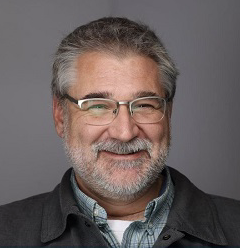
Rich is the Director of the Cornell Center for Advanced Computing, leading the planning and operations of the center, with a focus on meeting the evolving needs of Cornell researchers and the broader scientific community. Rich joined CAC in 2017 as Deputy Director, coming from Indiana University, where he previously led the Campus Bridging and Research Infrastructure team. Rich earned his PhD in Informatics at the Indiana Luddy School of Informatics, Computing, and Engineering. Rich’s research interests include the establishment and governance of cyberinfrastructure organizations, high performance and cloud computing, application containerization, and ethnography of virtual organizations.
John Towns

John Towns is currently an Executive Associate Director for engagement with the National Center for Supercomputing Applications, and a deputy CIO for Research IT in the Office of the CIO, Champaign, IL, USA. He is also a PI and Project Director for the NSF-funded XSEDE project (the Extreme Science and Engineering Discovery Environment. He holds two appointments with the University of Illinois at Urbana-Champaign, Champaign. He provides leadership and direction in the development, deployment, and operation of advanced computing resources and services in support of a broad range of research activities. In addition, he is the founding chair of the Steering Committee of PEARC (Practice and Experience in Advanced Research Computing, New York, NY, USA. Towns received the B.S. degree from the University of Missouri-Rolla, Rolla, MO, USA, and the M.S. degree and astronomy from the University of Illinois, Ames, IL, both in physics.
Andrew Sherman

Dr. Andrew Sherman is a Senior Research Scientist in the Department of Computer Science and at the Yale Center for Research Computing. His background is in numerical linear algebra, scientific computation and high-performance parallel computing, and he has extensive experience developing algorithms and software for the physical sciences and engineering in both academic and commercial environments. In addition to his research computing role, Dr. Sherman is a Lecturer in Computer Science and teaches a class on parallel programming techniques. He holds one of Yale’s first PhD’s in Computer Science, taught at several major universities, and led several startups that developed high performance computing tools and software. Currently, Dr. Sherman is the Principal Investigator of a grant funded by the National Science Foundation to expand and broaden the pipeline of professionals who can help researchers (especially at small-to-medium-sized schools or from underrepresented groups) make effective use of advanced computing.
Henry Neeman
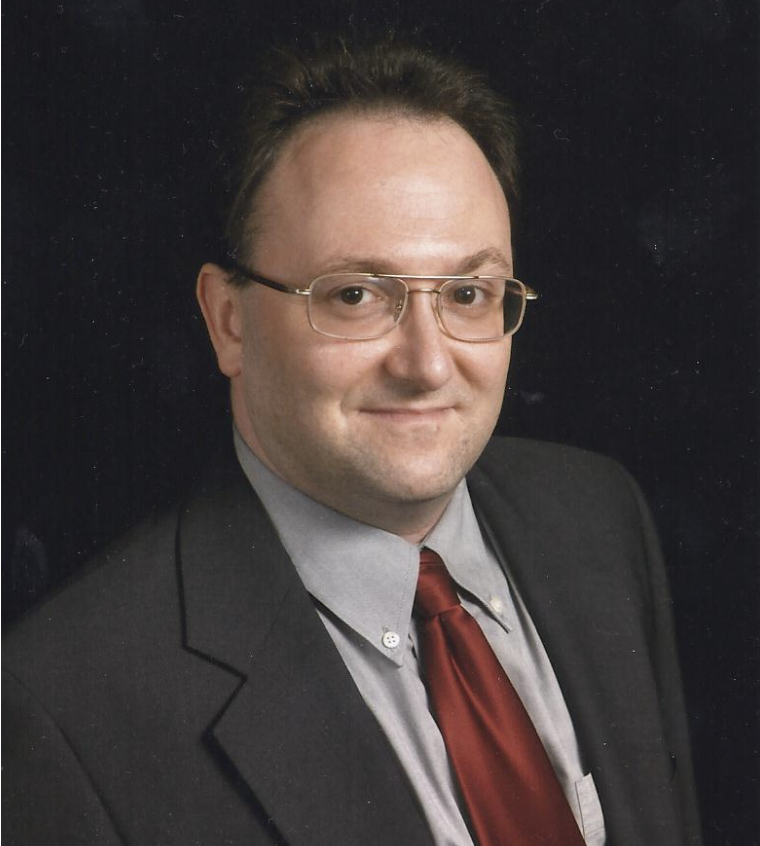
Dr. Henry Neeman is the Director of the OU Supercomputing Center for Education & Research, Executive Director of Research Computing, Associate Professor in the Gallogly College of Engineering and Adjunct Associate Professor in the School of Computer Science at the University of Oklahoma (OU). He serves as founder and co-lead of the Virtual Residency program for training Research Computing Facilitators, Principal Investigator of the NSF-funded Certified Cyberinfrastructure Facilitator Training & Development (CCIFTD) program, and the founder and co-lead of the Cyberinfrastructure Leadership Academy. He previously served as the joint co-lead of the XSEDE Campus Engagement program, which included the Campus Champions. He received his BS in computer science and his BA in statistics with a minor in mathematics in 1987 from the University at Buffalo, State University of New York, his MS in CS from the University of Illinois at Urbana-Champaign in 1990 and his PhD in CS from UIUC in 1996. Before coming to OU, Dr. Neeman was a postdoctoral research associate at the National Center for Supercomputing Applications at UIUC, and before that served as a graduate research assistant both at NCSA and at the Center for Supercomputing Research & Development.
Erik Scott
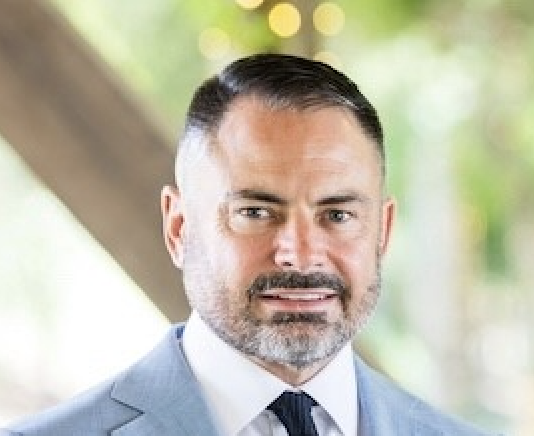
Erik is a product manager at Microsoft, responsible for HPC strategy and roadmap development for the hardware infrastructure that powers Microsoft Cloud. Bridging customer requirements, technical development, and business strategic direction. He has expertise in managing design, deployment and operations of high-performance computing architectures. With a proven track record of success developing and implementing solutions that maximize end user efficiency and business value. Demonstrated ability to deliver competitive advantage solutions through strong skills in leadership, business strategy, budget and partnership management. Over the past twenty-one years, he spent developing HPC solutions across Oil and Gas, Exploration and Production, government and SoC for EDA.